
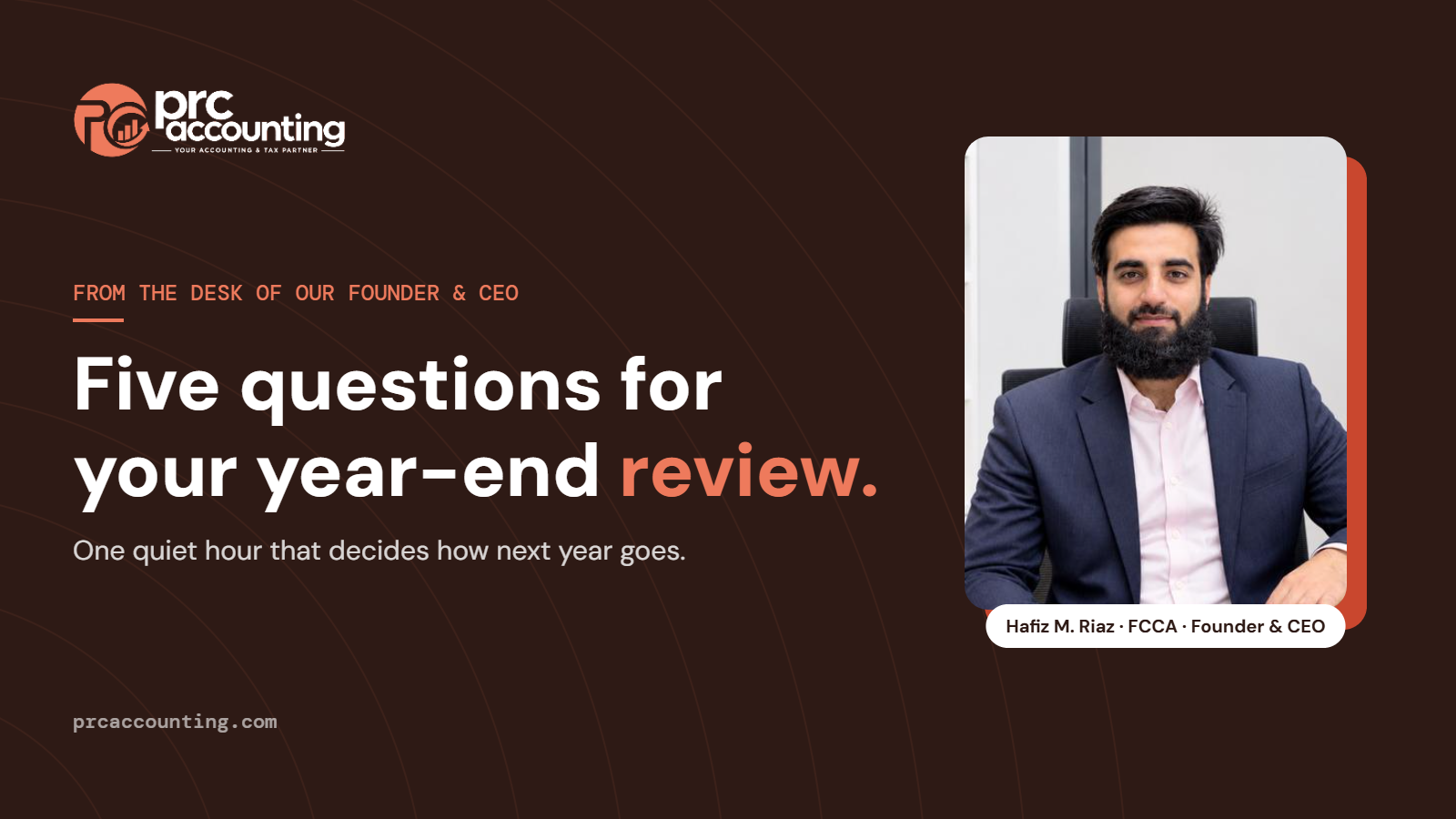
Every December I sit down with owners for what I call the year-end review. It is not a tax meeting and it is not a bookkeeping catch-up. It is one quiet hour with the full year of numbers on the table, asking a short list of questions that decide how the next year goes. The books have to be closed and reconciled first, because the answers are only as good as the records behind them.
Over the years the list has settled into five questions. None of them needs a finance degree. All of them need honest numbers. Here they are, in the order I ask them.
1. Where did the profit actually come from?
Most owners know their total revenue for the year. Far fewer know which part of the business earned the profit. A company can grow sales by twenty percent and keep the same profit because the new revenue came from the lowest-margin work.
Break your gross margin out by service line, product group or customer type, whichever matches how you sell. Look for the line that carries the business and the line that quietly drains it. That single view often changes pricing, hiring and marketing decisions more than any other report I prepare.
2. Did cash follow profit?
Your profit and loss statement can show a strong year while the bank balance tells a different story. The gap usually sits in a handful of places: customers who have not paid yet, inventory sitting on shelves, loan principal repayments, equipment purchases and owner draws. None of those appear as expenses on the P&L, yet every one of them uses cash.
Reconcile the change in your bank balance to your net profit for the year. When you can explain the difference line by line, you understand your business. When you cannot, that is the first thing we fix.
3. Which costs grew faster than revenue?
Costs rarely jump all at once. They creep: another software subscription, a vendor price increase nobody renegotiated, overtime that became normal. Each one is small. Together they decide whether next year’s growth turns into profit.
Compare each major expense category to last year and calculate it as a percentage of revenue. Any cost that grew faster than sales deserves a conversation. Some increases are investments you chose on purpose. Others simply happened, and those are the ones worth reversing before January.
4. How concentrated is your revenue?
I ask every owner to list their top five customers and what share of total revenue each one represents. If a single customer accounts for a large portion of sales, the business carries a risk that never shows up on a financial statement until the day that customer leaves, delays payments or asks for a discount.
Concentration is not automatically bad. Many strong firms grew on the back of one anchor client. But it should be a known number, reviewed every year, with a plan to widen the base or to protect the relationship deliberately.
5. What does the first quarter of 2027 need?
The review ends by looking forward. January through March is when many businesses feel the tightest on cash: year-end bonuses, insurance renewals, annual subscriptions and slower collections after the holidays all land at once.
Tax payments belong on that calendar too. For individuals who pay estimated tax, the IRS lists January 15 of the following year as the due date for the September 1 to December 31 period, which for 2026 income means January 15, 2027 (IRS, Estimated tax FAQs). If that payment applies to you, plan for it now rather than discovering it in the second week of January. Map the known outflows for the quarter against expected collections, and you will know in December whether January needs a cushion.
Why this belongs on the calendar every year
An annual review works best as a habit, not a rescue. Owners who ask these five questions every December make calmer decisions in January, walk into lender and tax conversations with clear answers, and catch small problems while they are still small. The questions stay the same each year. The answers are what change, and watching them change over several years tells you more about your business than any single report.
How PRC can help
At PRC Accounting & Taxation, we close and reconcile the year, prepare margin, cash and expense trend reports, and walk through these five questions with you so the next year starts with a plan rather than a guess. To schedule your year-end review, book a free 30-minute consultation, call us at (984) 379-7823, or email office@prcaccounting.com.
Hafiz M. Riaz, FCCA, Founder & CEO, PRC Accounting & Taxation LLC. IRS PTIN holder. This article is general information, not tax or legal advice for your specific situation.
Sources
- IRS, Estimated tax FAQs: When are quarterly estimated tax payments due?
- IRS, Publication 505 (2026), Tax Withholding and Estimated Tax
Free 30-minute call
Want a second pair of eyes on your books?
Pick a time that suits you and talk it through with our team.
Book a free call →This article is general information, not tax or legal advice for your specific situation. Confirm dates and rules against the current IRS source before you rely on them.